About me
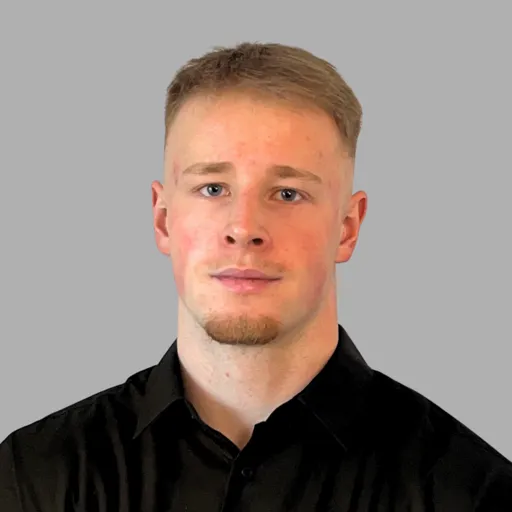
I am Paul Krümmling
Incoming computer science student at TU Munich, DPG physics prize winner and developer of the AI learning platform NexoraFlow. With Fusiores I am working on the next step: latency and reliability of local AI on embedded and embodied systems.
The work
Getting faster without getting less reliable
One question occupies me: how can the latency of local AI models — and of the processes around them — be reduced without losing reliability and safety? On a server, latency is a matter of comfort. On a system that moves, it is a matter of safety.
The usual routes — smaller models, aggressive quantisation, fewer checks — make a system measurably faster and at the same time harder to predict. That trade-off is what interests me: which speed-up is honest, and where is uncertainty merely deferred into a later malfunction? I am currently working my way systematically through measurement methodology, model compression and the question of how much time is actually lost outside the model.
Fusiores is the frame for this work. Right now it is a research effort, not a company — founding one is the step after that.
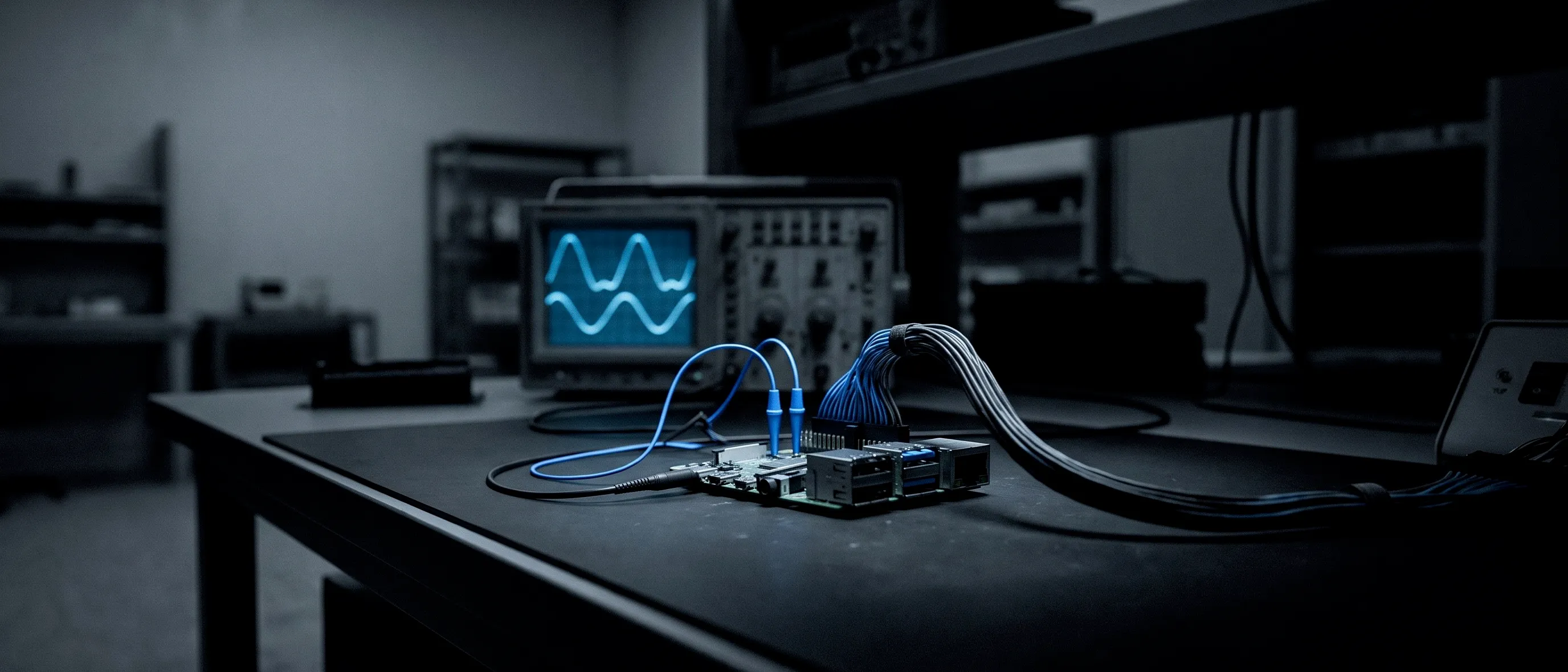 Visual — Lab / Testbench
 Attitude
How I work
- 01
Measure, do not estimate
Every claim about latency, accuracy or power draw has to be reproducible on the target hardware. Anything else is a guess with decimal places.
- 02
Simple before clever
Traceable architectures beat elegant special cases. What I cannot explain, I do not understand.
- 03
Safety from the start
Fallback levels and error handling belong in the first draft, not in the final project phase.
- 04
Honest about the status
What does not work yet is not presented as if it did. This site describes ongoing work, not a finished product.
Background
Milestones
- Mathematics A-levels
- Flawless Final examination completed without a single error
- Physics prize
- DPG Prize winner of the German Physical Society
- Own product
- NexoraFlow Self-built AI learning platform
- Studies
- TUM Incoming computer science student
 Paul Krümmling
 The path here
From a learning platform to embedded systems
Before Fusiores I built NexoraFlow — an AI learning platform I developed myself, from the first idea to running operation. That work was about embedding large models into a product sensibly: what happens on failure, how does waiting time feel, where do people rely on an output?
The next step moves closer to the hardware. On a device that moves, the same questions stop being about comfort and become questions of safety. That is what I am working on now, alongside starting my computer science studies at TUM.
Contact
A question or a prototype?
I welcome questions about the topic, pointers from practice and hardware I am allowed to test on.